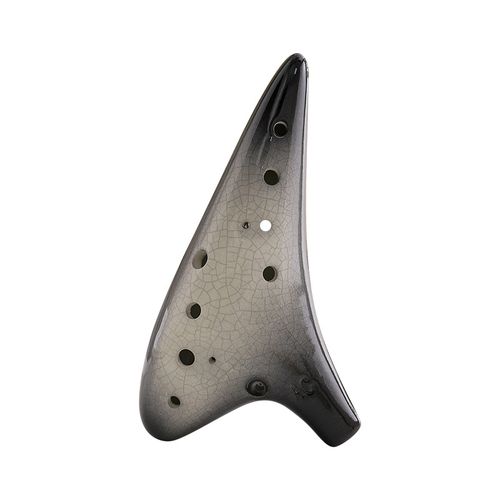
🎼 The Secret of Form: Why Different Ocarina Shapes Sound Different
For many ocarina enthusiasts drawn in by Legend of Zelda Ocarina of Time, the most fascinating aspect of the ocarina instrument is its diverse shapes. But beyond aesthetics, have you ever wondered why different Ocarina shapes sound different?
You might have downloaded an ocarina of time walkthrough and found loz ocarina of time sheet music, but to understand tonal differences, we need to delve into the acoustic principles behind the Ocarina's shape. Eidolove reveals how different shapes alter internal resonance and, consequently, the tonal quality when you play melodies from the legend of zelda ocarina of time.
This article will compare common Ocarina shapes, explaining how they affect sound characteristics, helping you move past searching for rina of time or ocarina or time and make the most informed purchasing decision.
I. 🧠 Scientific Review: The Cavity is the Heart of Tone
As discussed, the Ocarina is a Helmholtz Resonator. The core determinant of tone quality is the internal cavity:
Resonance Frequency: The air mass and volume within the cavity determine the fundamental frequency (pitch).
Tone Quality & Harmonics: The geometric shape of the cavity and the reflective properties of its inner walls affect the decay and mixture of higher harmonics in the sound. This directly determines the "color" and "brightness" of the tone.
II. 🎶 Tonal Differences of Three Common Ocarina Shapes
While the number of holes (e.g., 12-hole) and the fipple design primarily affect tuning, shape has a subtle but significant influence on tone:
1. Tear-Drop/Classic Spherical (The Link Shape)
Shape Characteristic: The cavity is rounder and symmetrical, the most classic shape for an ocarina instrument, and the model used by Link in Legend of Zelda Ocarina of Time.
Acoustic Advantage: This shape offers more uniform internal wall reflection, which helps suppress undesirable overtones.
Tonal Characteristic: The tone is usually the purest and softest, possessing an ethereal, healing quality, making it the ideal choice for playing ocarina of time theme music.
2. Inline/Transverse Ocarina (Flute Shape)
Shape Characteristic: The cavity is long and cylindrical, more akin to a flute or recorder.
Acoustic Advantage: This elongated cavity may lead to different sound reflection along the longitudinal axis, making it more sensitive to airflow.
Tonal Characteristic: The tone tends to be brighter and clearer, with slightly stronger projection. However, due to the change in cavity volume, it demands higher precision in breath control.
3. Multi-Chamber Ocarina
Shape Characteristic: Complex structure containing two or more independent cavities, often larger and irregularly shaped.
Acoustic Advantage: Multiple internal chambers can extend the range (e.g., from 12 holes to 21 holes).
Tonal Characteristic: The tone may have subtle differences between different registers, requiring the player to better adapt to the air pressure demands of each chamber.
III. 🎯 Eidolove's Recommendation: Choosing Your Tone Shape
If you are searching for ocarina of time hints or studying an ocarina of time walkthrough, and crave the classic Link sound:
Choose the Classic Tear-Drop Shape: This shape provides the most balanced, pure tone, closely resembling the auditory experience of the legend of zelda ocarina of time.
Material Over Shape: Regardless of the shape, Eidolove ensures the use of quality ceramic or plastic, which influences the warmth or clarity of the tone more than the shape itself.
🏆 Conclusion: Shape Molds Tone, Skill Creates Melody
While shape influences tone, correct fingering and stable breath remain the key to playing loz ocarina of time melodies flawlessly. Now that you understand the science behind different ocarina instrument shapes, you can make an informed choice.
Choose an Eidolove Ocarina whose shape and tone match your desire, and start your musical adventure!