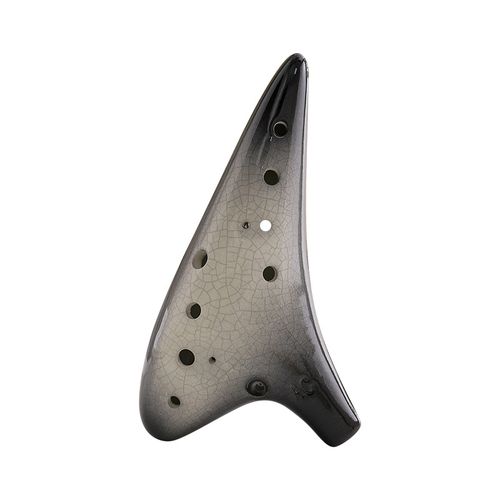
For many ocarina enthusiasts inspired by Legend of Zelda Ocarina of Time, the straightforward playability of the ocarina instrument is its main charm. However, as you delve deeper, you'll discover Ocarinas come in different keys, most commonly C, G, and F.
Understanding these fingering systems is key to successfully playing all the beautiful melodies in the legend of zelda ocarina of time. You might have found an ocarina of time walkthrough and ocarina of time hints, but to play more fluidly and professionally, you must know which system your Eidolove Ocarina uses.
Don't be confused by rina of time or ocarina or time misspellings; this article will explain the three main Ocarina fingering systems, helping you make the most informed choice!
I. 🎶 Core Concept: What is the Ocarina's "Key"?
The "key" of an Ocarina refers to the lowest note the instrument produces when all finger holes are closed.
Key of C: Produces a C4 (Middle C) when all holes are closed.
Key of G: Produces a G4 when all holes are closed.
Key of F: Produces an F4 when all holes are closed.
II. 🎮 Zelda Player's Choice: Why Key of C?
For players primarily inspired by Legend of Zelda Ocarina of Time, we highly recommend the Key of C 12-Hole Ocarina:
Perfect Match: The range and pitch of the C Ocarina are best suited for playing the classic themes from ocarina of time, such as "Song of Time" and "Zelda's Lullaby."
Richest Resources: Most ocarina of time walkthroughs and fingering charts are designed based on the C Ocarina, making learning resources the most accessible.
III. 🖐️ Fingering System Breakdown: Universal & Chromatic
Regardless of whether your Eidolove Ocarina is in C, G, or F key, they all follow the same principles in fingering structure:
Diatonic Fingering (Major Scale): The 10 main holes (8 finger holes and 2 thumb holes) on the Ocarina are designed based on the Major Scale (Do, Re, Mi...). You only need to lift the fingers sequentially to play the main scale of that key.
Chromatic Fingering (Accidentals): To play chromatic notes (such as F# or Bb), you need to use cross-fingering—simultaneously covering certain holes while lifting others to fine-tune the effective volume of the cavity. Mastering these chromatic fingerings is essential for playing the complete the legend of zelda ocarina of time soundtrack.
IV. 🎯 How to Choose and Practice
Beginners: It is highly recommended to start with a Key of C 12-Hole Ocarina due to its versatility and ease of finding learning resources and ocarina of time hints.
Advanced Players: If you want to play ensemble pieces in specific keys, consider G or F Ocarinas.
Practice Technique: No matter which key you choose, ensure you start with slow scales and correct chromatic fingering to avoid forming bad habits.
🏆 Conclusion: Choose Your Key, Start Your Musical Journey
Understanding the difference between C, G, and F keys helps you better utilize the potential of the ocarina instrument. Choose the Eidolove Ocarina that fits your needs, delve into the fingering system, and conquer all the challenges in legend of zelda ocarina of time!